
Firefighter Health Today: Practical Steps to Reduce Contamination Exposure
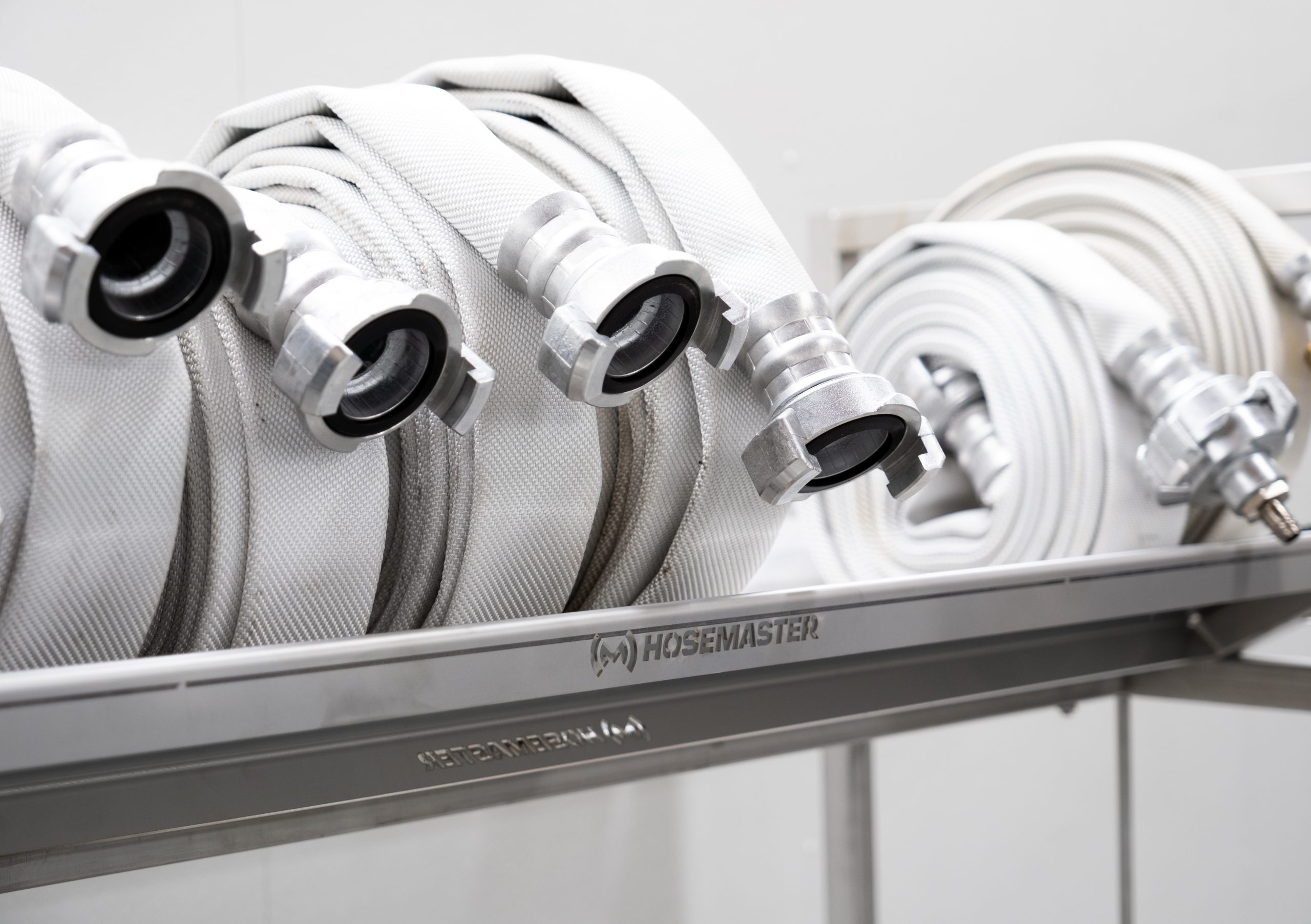
Clean and thoroughly tested hoses are a concrete step toward a healthier and safer workplace. Read how modern hose care helps address PFAS and other incident residues–without adding workload. Bravery deserves the best.
Fire hoses are the workhorses of nearly every operation. After the call, however, they carry back what you do not want at the station: firefighting water runoff, soot, combustion by-products, and in some cases, PFAS traces from affected environments.
Over time, repeated handling of contaminated hose may increase exposure risks and undermine station hygiene. This article outlines practical actions to reduce that exposure, and how integrating cleaning with documented, NFPA 1962–compliant testing can make your workflow safer and more consistent.
Why the Concern? Two key perspectives
(1) Residual contaminants travel
Post-incident residues can migrate from the bay to vehicles and common areas if hoses are handled, stacked, and stored without a consistent cleaning process. This is especially common when hoses are not cleaned promptly after the call.
(2) PFAS context
Some environments, like legacy AFFF sites, industrial incidents, contaminated runoff, may introduce PFAS residues to equipment. While no single step can solve the entire PFAS challenge, departments can lower cumulative exposure by improving post-incident cleaning and minimizing unnecessary re-handling.
The most important decon principles:
- Containment at the source. Limit cross-contamination by setting a clear “dirty → clean” flow in the station and using a defined staging area for used hose.
- Consistent cleaning, every time. Standardize the sequence so it doesn’t depend on who’s on shift. Automation helps.
- Minimize manual handling. Fewer touch points = lower potential contact.
- Drying counts, too! Residues can persist in damp layers. Dry thoroughly before storage.
- Documentation. If it isn’t logged, it didn’t happen, really. Especially, when you’re defending your program to leadership or insurers.
The human side
As we all know, firefighting is among the most at-risk occupations. Firefighters face physical, chemical, biological, and psyychosocial hazards, which some unexpected.
Robust programs and resources exist worldwide to help prevent adverse outcomes. In the U.S. NIOSH (CDC) researches firefighting health, tracks fatalities, and provides safety guidance. In the EU, EU-OSHA serves a similar role.

Where Hosemaster™ fits
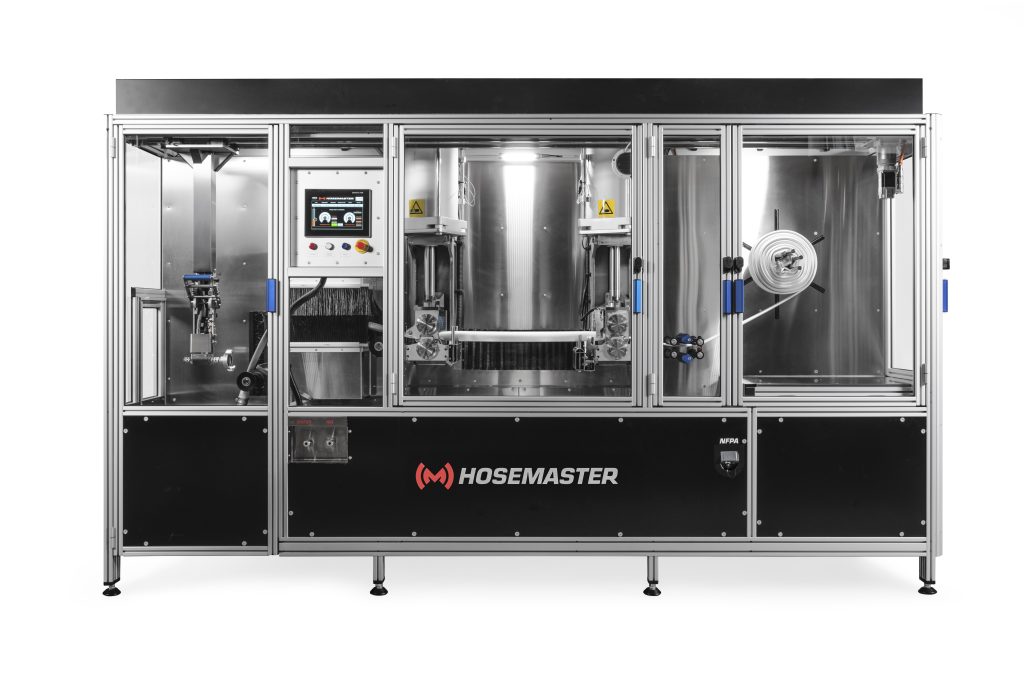
Hosemaster™ is a fully automatic hose care system that performs washing, pressure testing, leak detection, marking, drying, and coiling in a single, streamlined cycle. The aim of the whole system is simple: reduce manual handling and standardize the steps that keep hoses service-ready and cleaner for crews.
Again, let’s list some key elements that support health & safety:
- Automated wash cycle designed to help remove incident residues from hose surfaces and liners.
- Integrated drying to avoid prolonged moisture retention.
- Minimal handling (load, run, unload, etc) reduces contact time versus multistep manual processes.
- Water-use efficiency and internal circulation during pressure testing help control process water.
- Documented workflow with automated reporting for maintenance logs and audits.
Important: Hosemaster™ does not claim to “eliminate PFAS.” The system is designed to help reduce post-incident residues and handling exposure through consistent, automated cleaning and drying. For PFAS-specific policies, follow your authority having jurisdiction (AHJ) guidance and departmental SOPs. In the USA the primary federal AHJ on PFAS is the is the U.S. Environmental Protection Agency (EPA); many states have adopted stricter rules, especially related to AFFF phase-out and didposal. At the practical level, local environmental departments, fire marshals, and building officials often act as the immediate AHJ (ed. Red-tagging equipment or mandating actions in facilities such as aircraft hangars).
In the EU, the European Chemicals Agency (ECHA) and the European Commission manage PFAS assessment and restrictions under REACH, and member states implement relevant directives (such as Drinking water directive) via national law.
Add NFPA 1962 testing without extra steps
Many U.S. departments must prove annual full-length hose testing per NFPA 1962. Traditionally, that’s a separate setup that creates additional handling, space use, and time pressure.
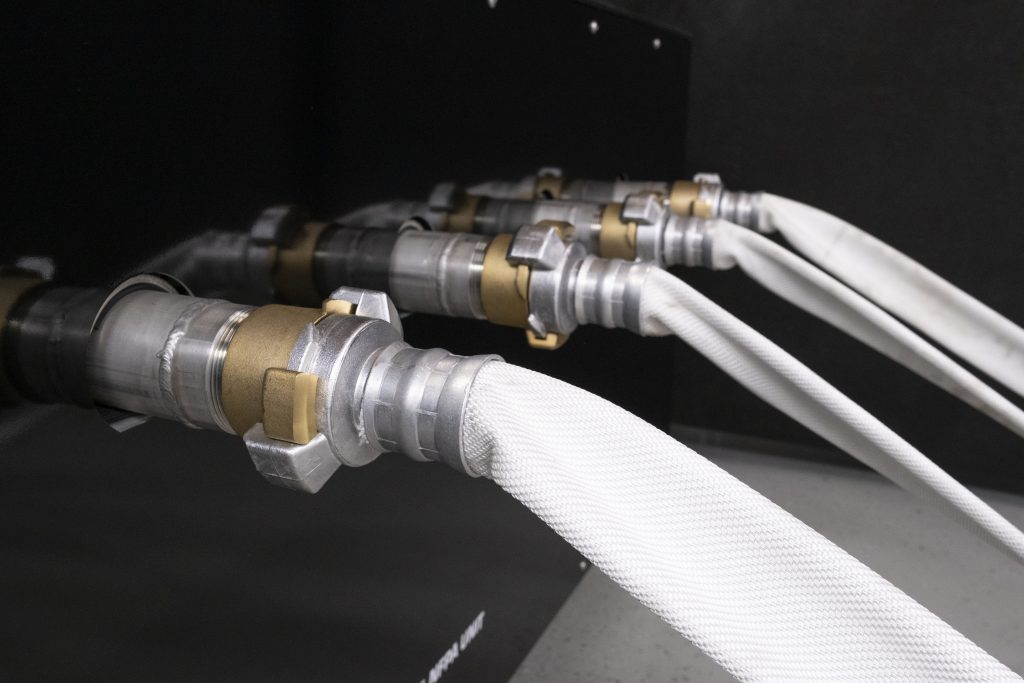
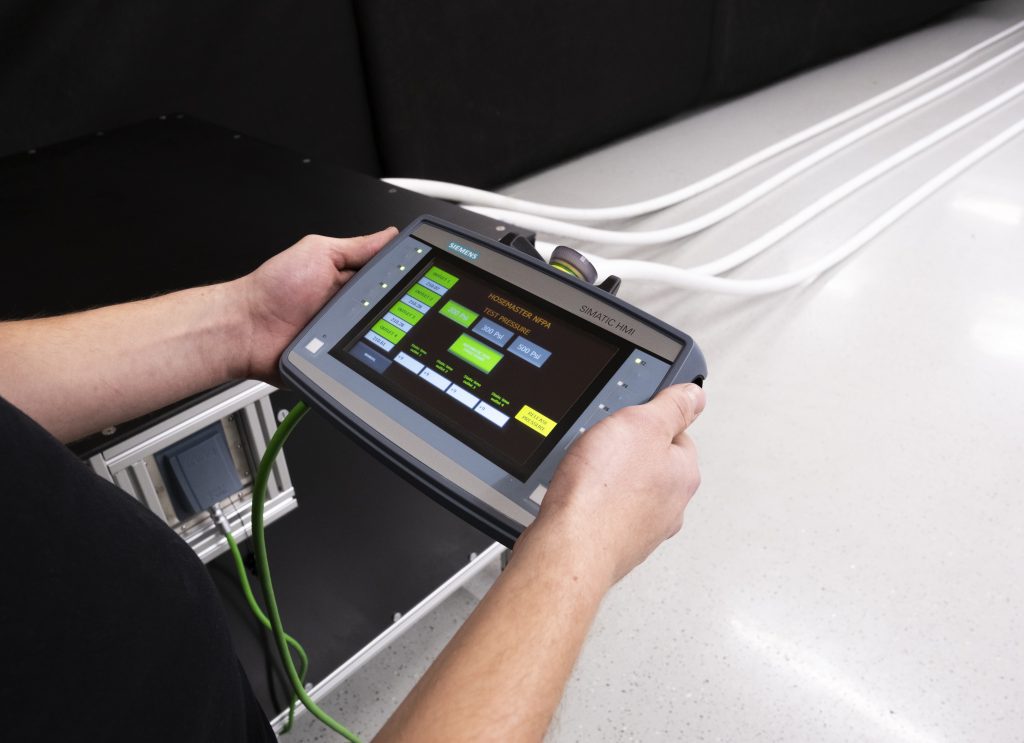
The Hosemaster™ NFPA Unit makes testing part of the same workflow–integrated into Hosemaster™ system or available as a standalone module with identical performance:
4 independently controlled 2″ outlets for simultaneous testing; adjustable pressure up to 500 psi depending on hose type; a control panel for real-time monitoring; and not forgetting the automated test reports to simplify record-keeping.
For crews, this means fewer transfers between stations and fewer manual moves, again another practical way to cut down contact time and keep the bay cleaner.
A sample “clean flow” your station can adopt
- Arrival & staging: Used hose is placed in a designated “dirty zone.”
- Load & run: Hose is loaded directly into Hosemaster for the wash + dry cycle (and, if scheduled, NFPA 1962 testing via the NFPA Unit).
- Coil & store: Clean, dried hose is automatically coiled and moved into the “clean zone” for storage or redeployment.
- Log: The system generates a record of the cycle and, where applicable, test results seamlessly filed to your maintenance history.
What success looks like
- Cleaner workflow: Clear separation between dirty and clean; fewer “gray areas” in the bay.
- Less handling: Crews spend less time lifting, dragging, re-stacking hoses between stations.
- Better documentation: Maintenance and test history are exportable, reviewable, defensible.
- Stronger safety culture: Decon becomes a pleasant routine, not just “nice to have”, supporting a Clean Fire Station principle.
FAQs
Does Hosemaster™ remove PFAS?
Hosemaster is designed to help reduce post-incident residues and contact exposure by automating cleaning and drying with fewer handling steps. Departments should follow AHJ guidance and their own PFAS policies for chemical-specific requirements.
Can we keep our existing procedures?
Yes. Most departments embed Hosemaster into their current SOPs and simply consolidate steps (wash, dry, coil, and if needed, NFPA 1962 testing) to cut handling and time.
How do we document testing?
The NFPA Unit provides automated test reports with pressure/time parameters for your records.
Ready to simplify decon and NFPA testing?
Get a quick assessment of your station’s setup, space, and testing needs. Contact us now!